
Aims
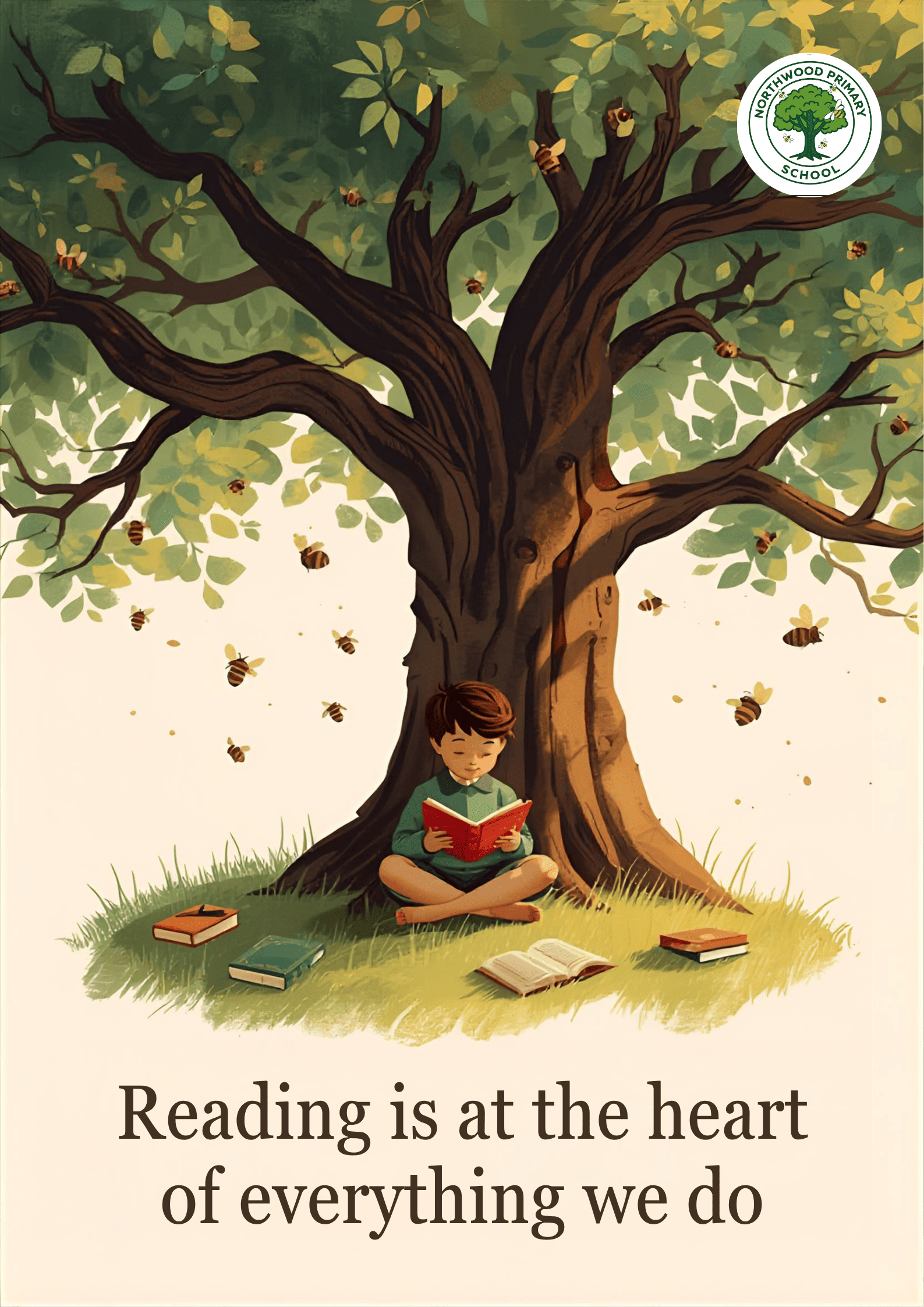
At Northwood Primary School, reading is at the heart of everything we do. Our aim is for children to develop into fluent, confident readers who display a love of books and choose to read for both pleasure and enjoyment. We are dedicated to our mission of enabling our pupils to become lifelong readers who have the skills for effective decoding so that they can read with ease and fluency.
We believe that reading is a key life skill and allows pupils to develop culturally, emotionally, socially and academically. Because of this, we ensure that all of our curriculum areas are enriched by a wide range of books that span fiction, non-fiction, a variety of cultures and traditions, poetry and play scripts.
To meet these aims for reading, we use a range of strategies and structures in the direct teaching of reading. In addition to this, we aim to capitalise on all opportunities for children to be reading outside of formal reading lessons by exposing them to a wide range of literature which supports other curriculum areas. Reading is prioritised by all staff, including school leaders. To promote reading further, each class has daily dedicated ‘Stay in the Story’ time to further embed a reading for pleasure culture and weekly ‘Book Chat’ sessions where children have opportunities to discuss books.
Reading for Pleasure
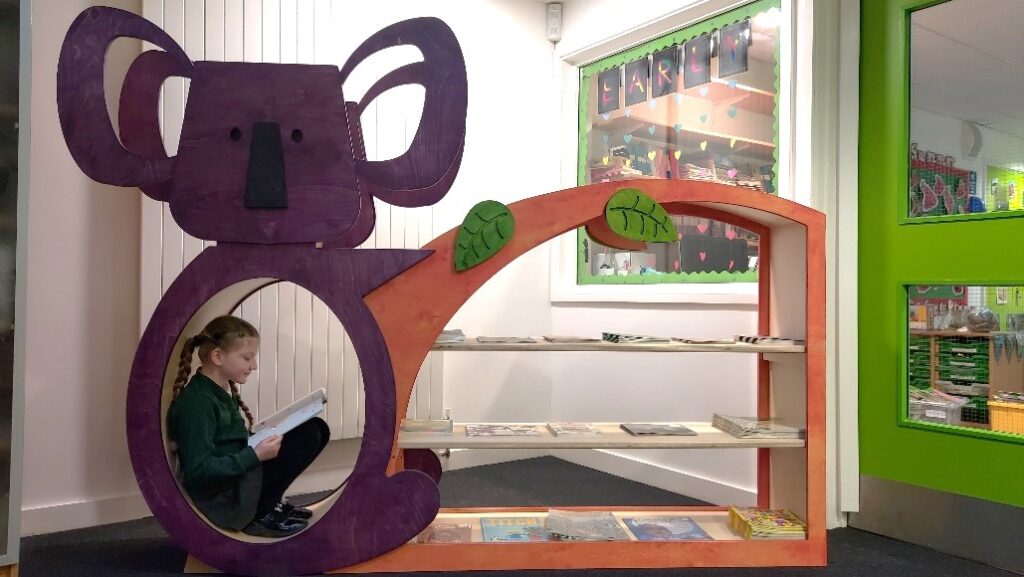
The most important thing about reading, is that our children enjoy it. A love of reading is at the heart of what we want to achieve for children who attend Northwood. We try to promote a love of reading through ensuring children are exposed to and have access to a wide range of books that interest all children; celebrate reading events such as World Book Day; dedicate weekly ‘Book Chats’ where children have opportunities to discuss, recommend and talk about books; and dedicate reading areas outside. Through the above, children see first-hand that there is true enjoyment in all things book-related and that reading is not just for the classroom but can additionally be enjoyed in your free time with your friends.
Reading at Home
To further develop children’s enjoyment and love of reading, we encourage children to continue their reading journey outside of the classroom and take that love of reading home. In order to do this, it is imperative that they are able to take high-quality books home with them. At Northwood, we support this by doing the following:
In Early Years and Key Stage 1, children take home two books: one to support their skills of decoding and one that they can share and enjoy with their parents/carers. We believe that giving opportunities to not only develop their ability of decoding as well as sharing books with people at home will enhance the opportunities children have whilst simultaneously developing a life-long love of reading.
When children enter Key Stage 2, children will have freedom over the books they chose to read for pleasure. Each class has a dedicated bookshelf which has a range of literature that is refreshed and rotated, based on the interests of children in the class. Children have an opportunity to discuss what they have read, their reading interests and make recommendations to their peers through weekly book chat sessions. These sessions further inform the books that are rotated on bookshelves to ensure children have variety of books they have available to them. If a child has a particular interest, our staff are dedicated to nurturing this interest by providing books related to this.
To support communication and development around reading, each child has a reading record that they take home daily and return to school. When staff listen to a child read, they will write comments in children’s reading record to ensure parents and carers are aware of the progress and support required. We encourage parents and carers to also use this reading record to note comments about their child’s reading at home so we can work together in promoting a life-long love of reading.
Phonics at Northwood – Little Wandle Letters and Sounds Revised
Little Wandle Letters and Sounds Revised is a complete systematic synthetic phonics programme (SSP) developed for schools by schools. Based on the original Letters and Sounds, but extensively revised to provide a complete teaching programme meeting all the expectations of the National Curriculum, the Ofsted Deep Dive into reading and preparing your children to go beyond the expectations of the Phonics Screening Check.
Phase 2 sounds taught in Reception Autumn 1
Phase 2 sounds taught in Reception Autumn 2
Phase 2 sounds taught in Reception Spring 1
How we teach blending
Alien Words
Tricky Words
| EYFS Documents | Download |
| Engaging Parents | Download |
| Programme Overview | Download |
| Autumn 1 Grapheme Information Sheet | Download |
| Autumn 2 Grapheme Information Sheet | Download |
| Capital Letter Formation | Download |
Reading Learning Journey
Children’s reading journey begins at Northwood with the teaching of phonics. Phonics is the code that allows our children to decode words. Phonics helps our children to learn to read accurately and fluently and is an essential part of their curriculum in Early Years and Key Stage 1. The synthetics phonics scheme we use to deliver phonics at Northwood is Little Wandle Letters and Sounds. This is taught daily in Early Years and Key Stage 1 until children have ‘completed the code’.
Synthetic phonics prioritises the skill of segmenting graphemes to decode words. We teach children to recognise phonemes discretely and match them to the graphemes. To fully decode a word, children must master the skills of segmenting and blending the phonemes together into words. Once children have mastered the skills of decoding and blending, reading lessons begin to focus on automaticity and fluency. Little Wandle has an aligned reading scheme which is used to help develop children’s reading fluency in the first instance. Once this has developed, children are exposed to a wider range of literature in their reading lessons which continues to focus on automaticity but additionally their reading. comprehension
In Key Stage 2, we have carefully mapped out a reading spine that ensures children study a wide range of books from various authors, different genres and cultural backgrounds. Reading lessons will use a consistent approach to ensure children develop into skilled readers. Teachers use key components to activate, connect and background build children’s prior knowledge before modelling what is required to be an expert reader. Within lessons, children will have opportunities to develop their comprehension through discussions, debates and exploration of what they have read.